New Research: What Social Media Is Actually Doing to How We Think about our Bodies

- Equip surveyed 800 adults to find out how social media impacted their body image.
- The results were eye-opening, showing not only that social media has a significant negative impact on body image, but also that attempts to avoid harmful content resulted in it being served more frequently.
- In order to address this harmful pattern, systems of accountability need to be put in place for social media organizations. Harmful body- and food-related content needs to be treated as seriously as other harmful content.
Social media's impact on how people feel about their bodies has been well documented, but what’s been harder to quantify is its scale. New research from Equip surveyed more than 800 adults to find out exactly what people encounter online, how it affects them, and what happens when they try to push back.
Here's what we learned, and what it means for everyone navigating this complex digital environment.
The algorithm isn't neutral
Nearly 70% of respondents encountered social media content promoting dieting, restriction, body checking, or disordered eating in the past year, without ever looking for it. Only 8% sought it out.
When people tried to change what they were seeing, the algorithm often made things worse. Among respondents who actively sought out body-positive or recovery-focused content, 42% were subsequently served more fitness and body transformation content, and 33% received more restriction-focused "what I eat in a day" videos. Trying to opt out of harmful content functioned as a signal to serve more of it.
For people in eating disorder recovery, this dynamic can be dangerous. Recovery requires building a healthier relationship with food, movement, and body image—a process that becomes significantly harder when the platform you're on is actively working against you.
“It's definitely triggering to see that, it reminds me of my past struggles when I had an eating disorder, and it makes me feel pressured to look a certain way to be accepted or considered attractive. It triggers thoughts that I don't want to think about. It does increase my anxiety and depression around my weight and appearance, and it just makes me feel worse about my body. It reinforces unrealistic societal standards and has the potential to push me towards extreme behaviors.” -39-year-old woman
“These influencers reminded me of my previous eating disorder/disordered eating days when I was younger, like in my teens and 20s. It's taken so much internal work to undo all of the toxicity around women's bodies that I was exposed to when I was growing up, and watching influencer content like that takes me back to those days.” -37-year-old woman
Women bear a disproportionate share of the harm
The data breaks down sharply by gender. Nearly 75% of women encountered harmful body image content unsolicited, compared to about two-thirds of men. Women were more likely to encounter it frequently, more likely to feel worse about their appearance afterward, and nearly twice as likely as men to report a negative emotional impact. Among women whose behavior was affected, skipping meals was a significantly more common response than among men.
Open-ended responses added an important dimension to this picture. Women in their 40s and 50s described expecting body image pressure to ease with age, and finding social media amplified it instead. The moments when they were most vulnerable—including postpartum recovery, perimenopause, and midlife physical transition—were exactly when harmful content hit hardest.
This isn't incidental. Nearly 1 in 3 women develop disordered eating for the first time in midlife, according to Equip's data, and the content environment they're navigating is making that worse.
“I was feeling somewhat ok about my body, but the constant focus on appearance makes me more critical of how I look. Every time I'm on any social app, I see tons of Zepbound, Ozempic, & Wegovy ads as well as 'fitness' posts with super fit people in very little clothing. It makes me less confident.” -56-year-old woman
“I work very hard to retain a positive self-image. But when I am bombarded with this sort of stuff every single day, I cannot help a little bit of it seeping into my subconscious. So then I spend days/weeks fighting it back off. The pressure to appear perfect is astounding. And the connotation surrounding having any flaws in appearance at all is absolutely devastating to how I feel about myself.” -56-year-old woman
“As a 52-year-old female who is going through menopause (a HUGE body change!), I am astonished by how many videos are on IG and TikTok showing off women over 50 who have ‘perfect' bodies. They eat 100s of grams of protein per day, work out daily, lift heavy weights, etc. Or they just show off amazing outfits. This is totally unrealistic compared to the bodies of all my 50+ yo friends, and I feel tremendous guilt and shame watching these videos. It often spurs my friends and me to skip meals, overexercise (sometimes to the point of injury), or try silly new apps or wearable devices. It's so depressing and unrealistic. I thought the body image pressure would lessen after we turned 50yo — but I was wrong.” -52-year-old woman
Men are affected too—but they may be unaware
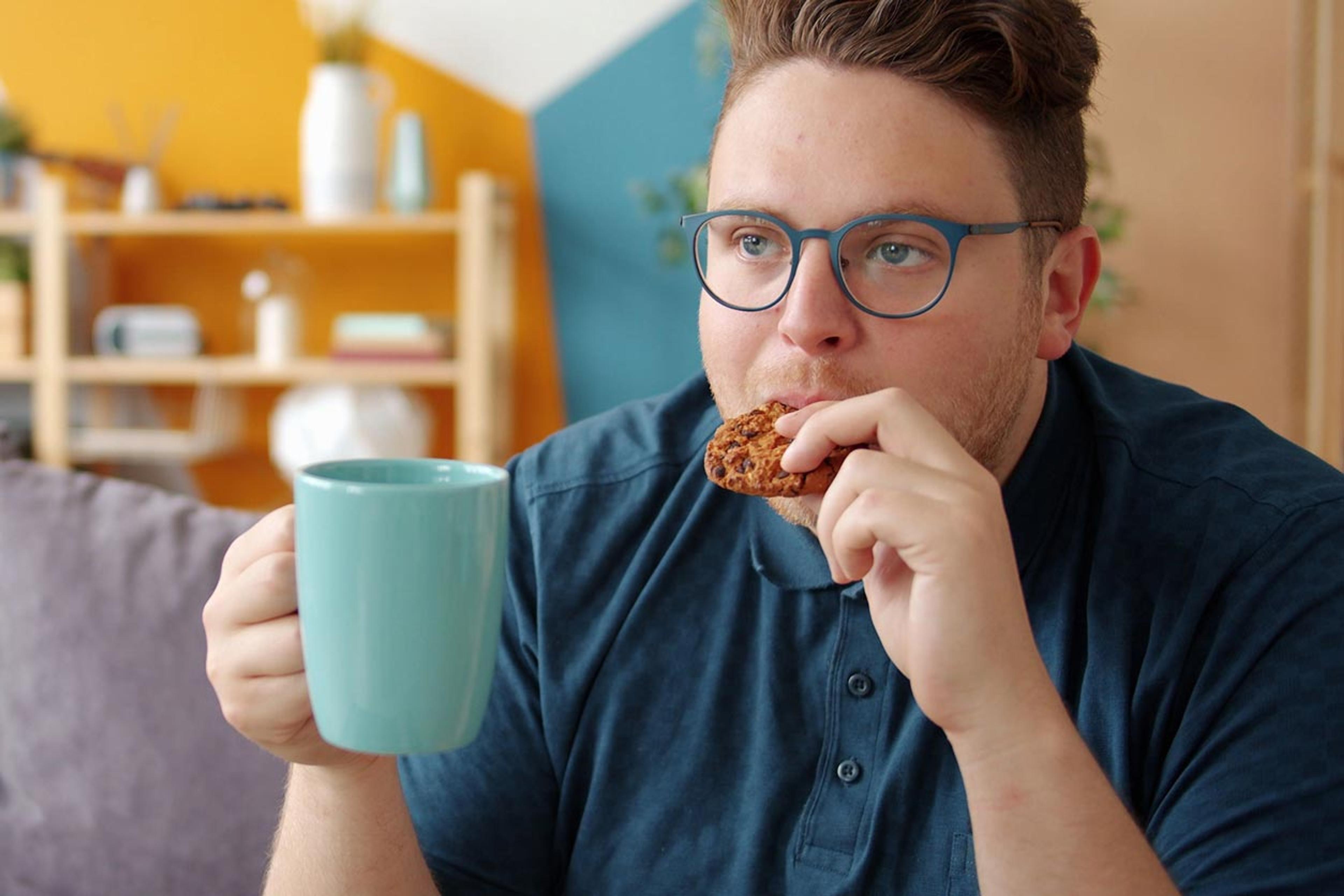
More than two-thirds of men said they've never felt triggered or distressed by harmful body image content on social media. But the behavioral data tells a different story.
Among men who reported that their thoughts or behaviors were actually affected by what they saw, more than half compared their bodies to others online. Men were also significantly more likely than women to increase compensatory exercise after exposure to harmful content. The harm is present. It just doesn't look like what we've been taught to recognize as harm.
Men are also encountering a distinct content ecosystem. Where women are more likely to see "thinspo" and weight-loss medication posts, men are more likely to encounter bulking and cutting content, material that frames disordered behavior as discipline, ambition, or self-improvement. This framing makes it far harder for men to identify what's happening to them, and far less likely that they'll seek help.
“The fitness and diet advertisements on Instagram made me constantly compare my body to influencers and feel pressured to achieve their physique through strict eating and exercise routines.” -20–year-old man
“Although I don't pay attention to ads and generally take a very dim view of diet culture and weight loss ads, I do find that it's hard sometimes to completely ignore people who present as 'very fit' on social media. I find that it makes me a bit uncomfortable at times, and I have to talk to others or check in with myself to make sure I'm not buying into negative stereotypes.” -40-year-old man
“It constantly shows unrealistically thin or in shape people & makes exaggerated claims about diet & exercise. Even though I know I look okay, constantly being exposed to this gets to me a little, it makes me defensive about my body even though it's realistically fine, and I might exercise a bit more or diet more than I should to compensate.” -55-year-old man
Paid content is part of the problem
It isn't just organic content driving this harm. Nearly 80% of respondents reported being served paid advertisements or influencer content related to weight loss, dieting, fitness, or body transformation. Of those, 28% said it increased their anxiety about weight or appearance, and 28% felt direct pressure to change their body.
Women again reported more negative impacts from paid content than men. But one finding cut across gender lines: GLP-1 and Ozempic ads were named unprompted by dozens of respondents as a distinct source of distress. Several people in eating disorder recovery described the current weight loss drug moment as a regression, a pressure to pursue thinness they thought they had left behind. When advertising for weight loss medications floods social media feeds at scale, the people most vulnerable to that messaging are often the ones with the least protection against it.
“I remember seeing an ad for a weight loss injection recently (within the past week or so). It gave me this feeling of "I might need this product if I'm going to have the 'right look' to fit the current social standard for how bodies are 'supposed to' look." I was able to think about it more objectively once that feeling passed, but it was very concerning to me that I had that type of reaction to the ad.” - 34-year-old woman
“I had a really bad eating disorder in my teens, and seeing these grown women looking like they had the body of a 19-year-old triggered thoughts about how I no longer look young in weight.” - 28-year-old woman
Looking forward: what our findings mean
Social media platforms have the technical capacity to identify and limit harmful content. The fact that recovery-seeking behavior triggers more harmful content reflects how recommendation systems are designed and what they optimize for. Meaningful platform accountability would require platforms to treat body image harm with the same seriousness they apply to other categories of harmful content.
For everyone navigating this environment, awareness matters. Recognizing that what appears in your feed is not random and that the discomfort or behavioral change you notice after scrolling may be connected to what you're being served is a first step.
If you've noticed that social media is having a negative effect on your body image or overall mental health, it may be time to take a break, or mute or block certain accounts. If you're concerned about how social media might be impacting your child, these expert-endorsed strategies can help.