Anxiety After Eating: Why It Happens and How to Cope


- Anxiety after eating can be distressing and is more common than many people realize.
- There are many potential causes, including disordered eating patterns, eating disorders, food-related trauma, food allergies, and more.
- Anxiety after eating may involve a range of physical and cognitive symptoms, such as rapid heartbeat, nausea, sweating, or difficulty concentrating. Emotional symptoms can include shame, guilt, dread, or irritability.

Sara McKelvey was 15 years old when she began experiencing feelings of anxiety after meals. This often happened when she ate food she had deemed "unhealthy"or when she felt she had eaten too much. "If I had eaten something that didn't fit into my idea of what I should be eating, it would cause body distress and comparison to others," says McKelvey, who is a peer mentor with Equip. She shares that she often found herself looking around the dinner table to see what others had eaten and how their bodies looked.
Experiences like McKelvey’s are commonly reported among individuals struggling with body image concerns or disordered eating. If eating a meal triggers feelings of anxiety or panic for you or a loved one, identifying underlying patterns- whether psychological, behavioral, or medical- is an important first step. Read on to learn more about some potential root causes of post-meal anxiety and distress, as well as how to seek long-term solutions and get the help that you or your loved one need.
Common symptoms of anxiety after eating
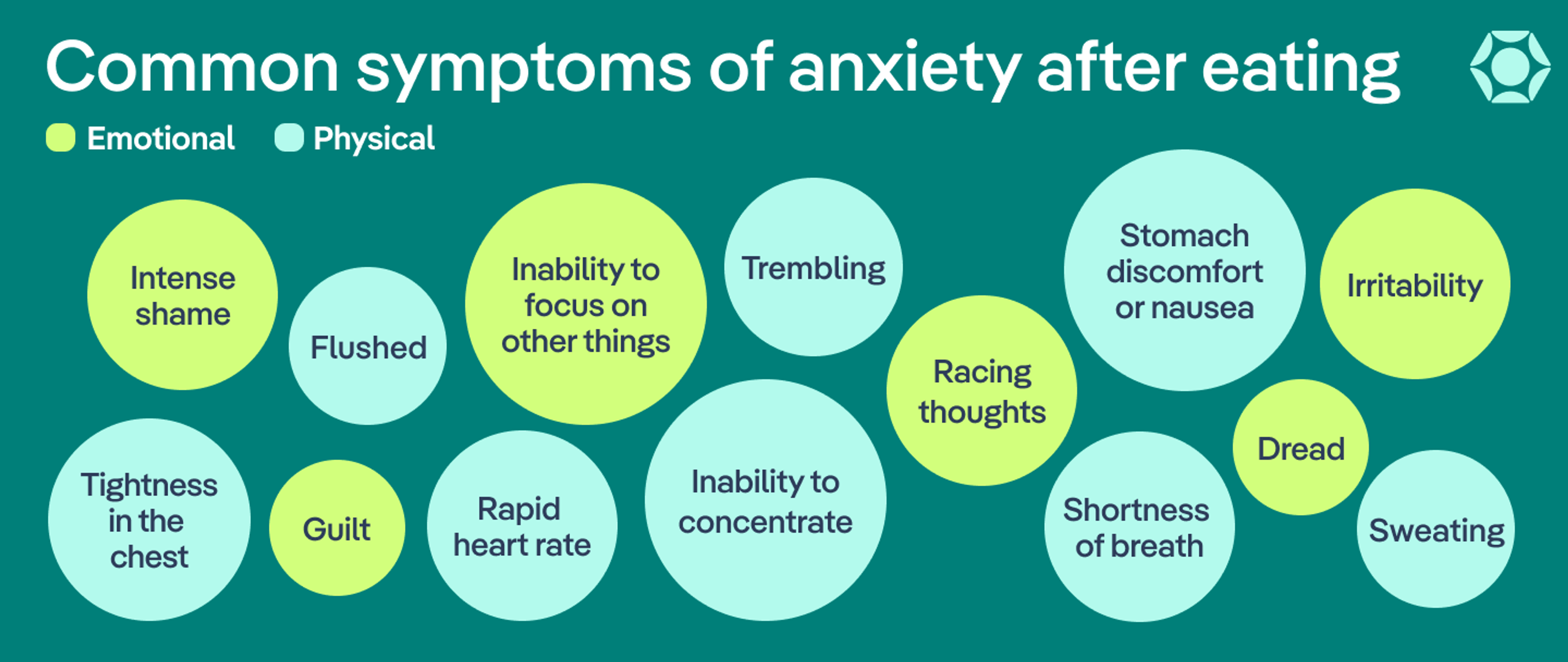
Some people experience a range of emotional and physical responses after eating. Physical responses can include a rapid heartbeat, stomach discomfort, sweating, or shortness of breath, while emotional responses may include racing thoughts, dread, or irritability. These symptoms are often related to anxiety, though they can also overlap with other medical or physiological conditions. It’s important to remember that if you experience severe, persistent, or unusual physical symptoms—such as chest pain, fainting, or difficulty breathing—you should seek prompt medical evaluation to rule out other health conditions.
Physical symptoms
- Rapid heart rate
- Stomach discomfort or nausea
- Shortness of breath
- Sweating
- Feeling/looking flushed
- Sensation of throat tightness
- Tightness in the chest
- Trembling
- Lightheadedness
Emotional symptoms
- Shame
- Guilt
- Racing thoughts
- Inability to focus on other things
- Irritability
- Dread
For many people, though, post-meal anxiety can be distressing but manageable with appropriate support and strategies.
What causes anxiety after eating?
There are many potential causes of anxiety after eating, and triggers can vary depending on the individual and context. Often, more than one factor may contribute, including physical, psychological, and behavioral causes.
Causes of anxiety after eating | What can help |
Restrictive eating or fear of certain foods | Regular, consistent meals, therapy to reduce fear around food |
Eating disorders (such as anorexia nervosa, bulimia nervosa, Avoidant/Restrictive Food Intake Disorder (ARFID)) | Multidisciplinary treatment, usually involving medical monitoring, therapy, nutrition management, and sometimes medication |
Pre-existing anxiety disorders (such as Generalized Anxiety Disorder)(pre-existing anxiety may heighten worry around meals) | Therapy (e.g., CBT) and/or medication under medical supervision |
Trauma-related food experiences (e.g., past choking, severe food poisoning, coercive feeding, or food scarcity) | Therapy, including approaches like cognitive behavioral therapy and gradual exposure |
Anxiety after eating is often influenced by multiple factors rather than a single cause. It may not be related to just one issue or cause. Sometimes, there may even be overlapping physical, psychological, and behavioral causes.
1. Disordered eating patterns
Anxiety after eating can arise if you or a loved one is struggling with disordered eating. This can include a range of eating behaviors: rigid or distressing beliefs about food that cause "uneasiness around food" and feeling unsure about food-related decisions, says Francesca Emma, LMHC. Disordered eating refers to problematic eating behaviors or beliefs that may not meet criteria for a diagnosable eating disorder but can still cause significant distress.” Examples of disordered eating include:
- Dieting, restricted eating, or irregular eating
- Hyperfocus on “clean” or “healthy” eating (sometimes described as orthorexia)
- Compensatory behaviors intended to ‘make up for’ eating (skipping the next meal, limiting calories the next day, exercising post-meal, or purging behaviors like vomiting or laxative misuse)
- Binge eating
- Misuse of diuretics, laxatives, or weight-loss medications
Dieting is strongly associated with the development of disordered eating patterns. “Despite usually starting with good intentions around health, it can lead to intense anxiety before, during, or after eating," emphasizes Kate Ringwood, LPC, a psychotherapist and owner of Serendipity Counseling Services.
Management or treatment options
Treatment for anxiety related to disordered eating varies based on the specific cause, but it often involves working with a dietitian and therapist who specialize in this issue. Ringwood says you don’t need to be diagnosed with a specific condition to work with either of these professionals.
2. An eating disorder
An eating disorder is not the same thing as disordered eating. While there are some similarities between the two, eating disorders are recognized mental illnesses and serious mental health conditions that require professional assessment and treatment. There are several different types of eating disorders, including anorexia nervosa (AN), bulimia nervosa (BN), binge eating disorder (BED), avoidant restrictive food intake disorder (ARFID), other specified feeding and eating disorders (OSFED), PICA, and rumination disorder.
"People experiencing eating disorders often feel very anxious after meals," says Carol Brown, MSW, an Equip therapist. "They often describe loud and intrusive thoughts and fears around weight gain, deep shame about what they should or should not eat, mental calculations about what food they will permit themselves to eat for the rest of the day, and mental fixation on whether their food choices were ‘healthy’ or ‘good’."
Treatment typically include a multidisciplinary care team of eating disorder experts who follow evidence-based treatments.
3. Related disorders
Obsessive-compulsive disorder (OCD), is a mental health condition characterized by persistent, intrusive thoughts, images, or urges (obsessions) that cause significant anxiety, along with repetitive behaviors or mental rituals (compulsions) performed in an attempt to reduce that distress. Although OCD is categorized separately from anxiety disorders, anxiety is a central feature of the condition. In some cases, obsessions may involve fears about contamination, illness, or food safety, which can contribute to stress around eating or food preparation.
Generalized anxiety disorder (GAD), which involves persistent and excessive worry about a range of everyday concerns, may also heighten anxiety before, during, or after meals.
"When someone is generally anxious, it can be taken out in a variety of ways—food being one of them," says Emma. "There is a sense of control around food, and so the decision-making process can contribute to emotional and physical responses around food. Food becomes the mechanism for the anxiety."
Management or treatment options
Treatment options range from talk therapy—such as cognitive behavioral therapy or exposure-based approaches—to medication when appropriate and prescribed under medical supervision.
4.Trauma-related anxiety
If you or a loved one has experienced a distressing or traumatic event related to food in the past, it's not unusual to experience ongoing feelings of anxiety around eating. Food-related trauma might include experiencing a severe allergic reaction, choking on food, or having a serious episode of food poisoning. Trauma-related fear of adverse consequences—such as choking or vomiting—may contribute to avoidant or restrictive eating patterns. For some individuals, this may develop into Avoidant/Restrictive Food Intake Disorder (ARFID), a diagnosable eating disorder characterized by significant restriction of food intake due to fear of negative consequences, sensory sensitivities, or low interest in eating, along with nutritional or psychosocial impairment.
Highly distressing experiences that occurred during or around meals—such as intense conflict or humiliation may also become associated with particular foods or environments. Over time, these associations can trigger anxiety in similar settings.. These events can then lead to negative emotions tied to a particular food or location, which may then cause anxiety before, during, or after eating.
Management or treatment options
Speaking with a licensed therapist can help you or a loved one navigate trauma-related food anxiety. Treatment often includes gradual, structured exposure to feared foods or eating situations when clinically appropriate. "Slow exposure and incorporation of feared foods or situations around food," can be helpful, advises Brown, who also recommends practicing deep breathing and grounding strategies and slowly facing the fear or trigger. Exposure to feared foods or situations should always be guided by a therapist trained in trauma-informed care and exposure techniques, following appropriate assessment and stabilization when needed.
What can make anxiety after eating worse
It's possible to unknowingly worsen the feelings of anxiety you or a loved one may be experiencing after eating. A variety of behaviors can cause this to happen, including any of the following:
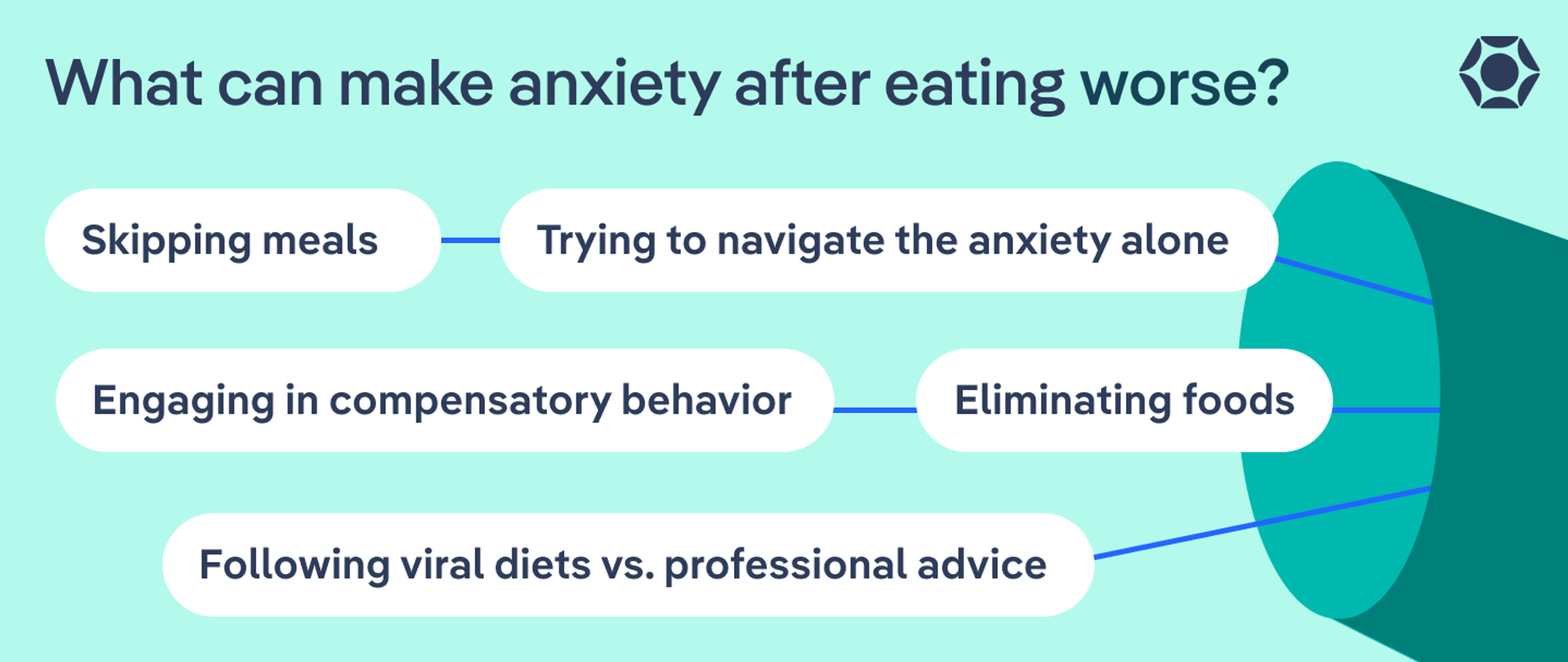
- Skipping meals: Skipping meals may seem like a way to manage food-related anxiety, but it often perpetuates the cycle. Undernourishment and food restriction can heighten physiological and emotional responses, including irritability, guilt, shame, and increased anxiety. "We are not our best emotional selves when we are undernourished," explains Brown. "So, as challenging as it is, making sure that you're completing meals really does help with anxiety management long-term." Ensuring you're well nourished helps to stabilize the nervous system, while skipping meals, on the other hand, often leads to heightened anxiety, irritability, guilt, and shame.
- Eliminating foods: While avoiding foods that cause you fear may provide temporary relief from anxiety, this approach often maintains the anxiety cycle. "People who struggle with food-related anxiety also often find that avoidance grows, and what started as cutting out specific foods can spiral into cutting out many foods over time," explains Brown.
- Trying to navigate the anxiety alone: This is a key point to understand: Food-related anxiety is a complex challenge, and addressing it alone can be very difficult. Anxiety often feels more overwhelming and isolating when you try to tackle it by yourself, which can increase distress. If you or someone you know is struggling, support is available.
- Following online eating trends without professional guidance: Social media is oversaturated with nutrition tips, tricks and hacks, shared without appropriate credentials or individualized context. There are plenty of downsides related to that influx of information; it can lead to restrictive eating patterns, heightened worry, and increased distress. "This is especially true in our diet- and health-focused culture," Brown explains. "And it can be especially exhausting trying to find and follow the right advice."
- Engaging in compensatory behavior: People may feel immediate relief when engaging in compensatory behaviors like purging, excessive exercise, or fasting to manage anxiety after eating. However, these behaviors are associated with greater psychological distress, anxiety symptoms, and maintenance of eating disorder behaviors over time, rather than long‑term anxiety reduction. These patterns can increase the overall severity of emotional symptoms and make recovery more challenging.
When anxiety after eating may be a sign you need more support
It’s normal to feel anxious at times, especially during periods of stress. But if you're noticing any of the following issues arise, then it may be a signal that you need more support:
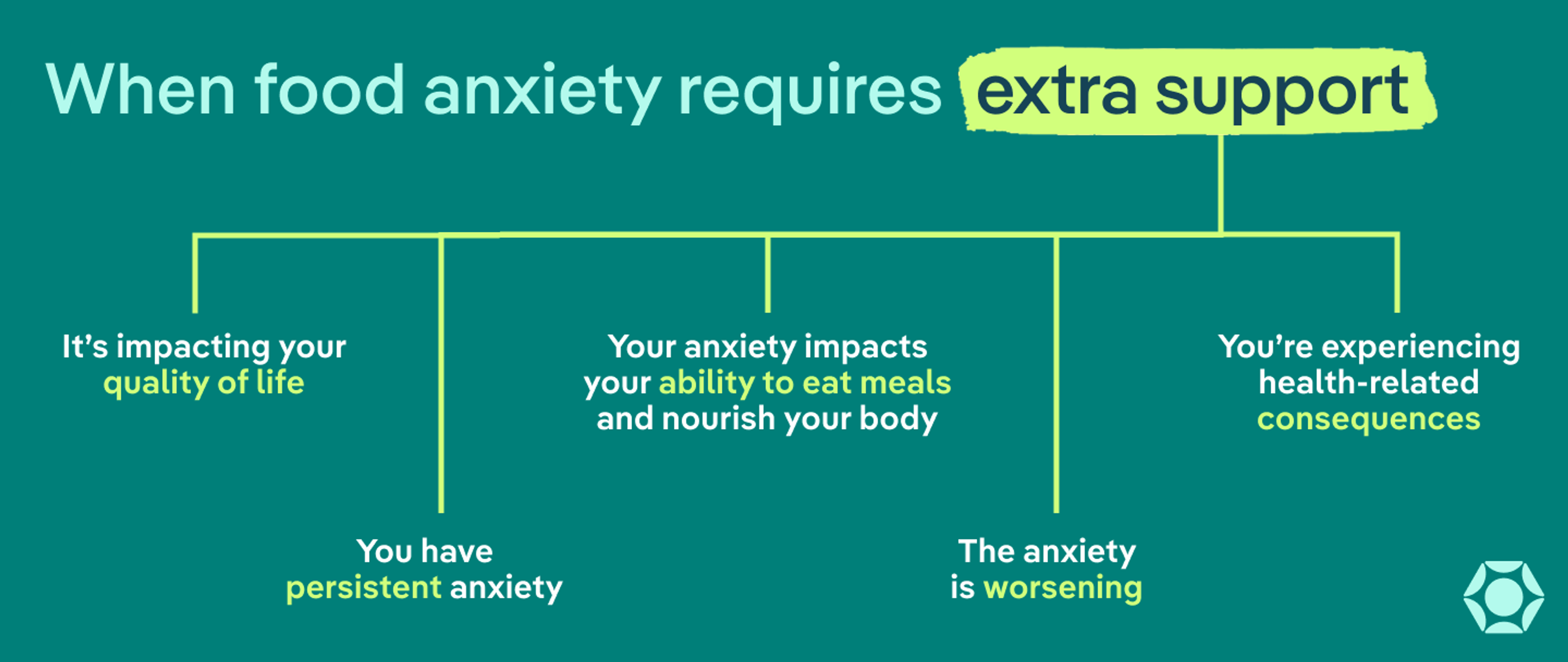
- You have frequent or ongoing anxiety. This includes frequently worrying about food or eating, noticing the anxiety show up daily, and being unable to find any relief from the anxiety.
- Your anxiety impacts your ability to eat meals and nourish your body. This shows up as skipping meals, cutting out numerous foods, or lacking variety in your diet due to anxiety.
- It’s impacting your quality of life. Do you find yourself skipping out on important social events because there may be food present? Or are you unable to concentrate on important things such as school, work, or relationships because of your food-related anxiety? This is another sign that it might be time to seek help.
- You’re experiencing health-related consequences. Physical symptoms like fatigue, dizziness, significant weight loss, and difficulty sleeping due to stress around food are all indicators that you need additional support
- The anxiety is worsening. If anxiety increases to the point where most mealtimes become stressful, or anxiety dictates all food choices, it’s time to seek help. "If most meals feel stressful, filled with anticipation or regret rather than nourishment, it’s an important signal not to ignore," says Emma.
These are just some of the common indicators that you might need more support, but it's not an exhaustive list. If overall, you're feeling like your anxiety is becoming unmanageable, reach out for support. "Catching this early, before it worsens, can make a huge difference," says Brown.
And one more important point: If you find yourself wondering whether you're sick enough to need support, that 's usually a good indicator that support is indeed needed. "When in doubt, reach out. You deserve to have support to help you find freedom from anxiety around food," adds Brown.
The bottom line
Anxiety after eating is a common and understandable experience that impacts many people and can have a variety of different causes. But avoiding food can cause real issues and potentially affect your health. Eating a nutritious, well-balanced diet is important to overall health and well-being.
If you find yourself experiencing frequent bouts of anxiety after eating, the good news is there's no need to solve this challenge alone. There are many forms of help and treatment available, depending on the underlying cause. Many people are able to reduce anxiety and improve their relationship with food with appropriate support.
Disclaimer
This content is for general informational and educational purposes only and is not a substitute for professional medical, mental health, or nutritional advice, diagnosis, or treatment. If you or a loved one are experiencing persistent or severe anxiety, distress, or physical symptoms related to eating, please consult a licensed healthcare provider or mental health professional. Content is based on current research and expert opinion as of 2026, but medical knowledge and recommendations may change over time. If you experience severe or life-threatening symptoms—such as chest pain, fainting, difficulty breathing, or a serious allergic reaction—seek emergency medical care immediately.
Frequently asked questions (FAQs)
Why do I feel anxious after I eat?
There are many potential reasons why someone might experience anxiety after eating, including, but not limited to: disordered eating patterns (which often involve rigid food rules), to food-related trauma in your past. Other reasons for anxiety after meals include an eating disorder and food sensitivities or allergies.
Can eating cause anxiety?
Yes, eating can trigger anxiety for some people. This may be due to a variety of factors, such as disordered eating patterns, trauma related to a meal or particular food, food allergies, an eating disorder, and much more. If you're frequently experiencing anxiety around eating, you may benefit from seeking guidance from a healthcare professional.
Gillette, Hope. 2022. “Here’s How You Can Deal with Anxiety after Eating.” Psych Central. January 5, 2022. http://bit.ly/4ab3IzW
“Disordered Eating vs. Eating Disorders | NEDA.” 2025. National Eating Disorders Association. November 7, 2025. https://bit.ly/4qkhciW
Mayo Clinic . 2024. “Eating Disorder Treatment: Know Your Options.” Mayo Clinic. 2024. https://bit.ly/4abSpr9
Johns Hopkins Medicine. 2022. “Obsessive-Compulsive Disorder (OCD).” Www.hopkinsmedicine.org. Johns Hopkins Medicine. 2022. https://bit.ly/3Mdbt0c
Munir, Sadaf, and Veronica Takov. 2022. “Generalized Anxiety Disorder.” National Library of Medicine. StatPearls Publishing. 2022. https://www.ncbi.nlm.nih.gov/books/NBK441870/